Publié le 22 March 2025
What is On-Site Machining?
On-site machining is a highly specialized field that operates behind the scenes. It is essentially the emergency service of the industrial world.
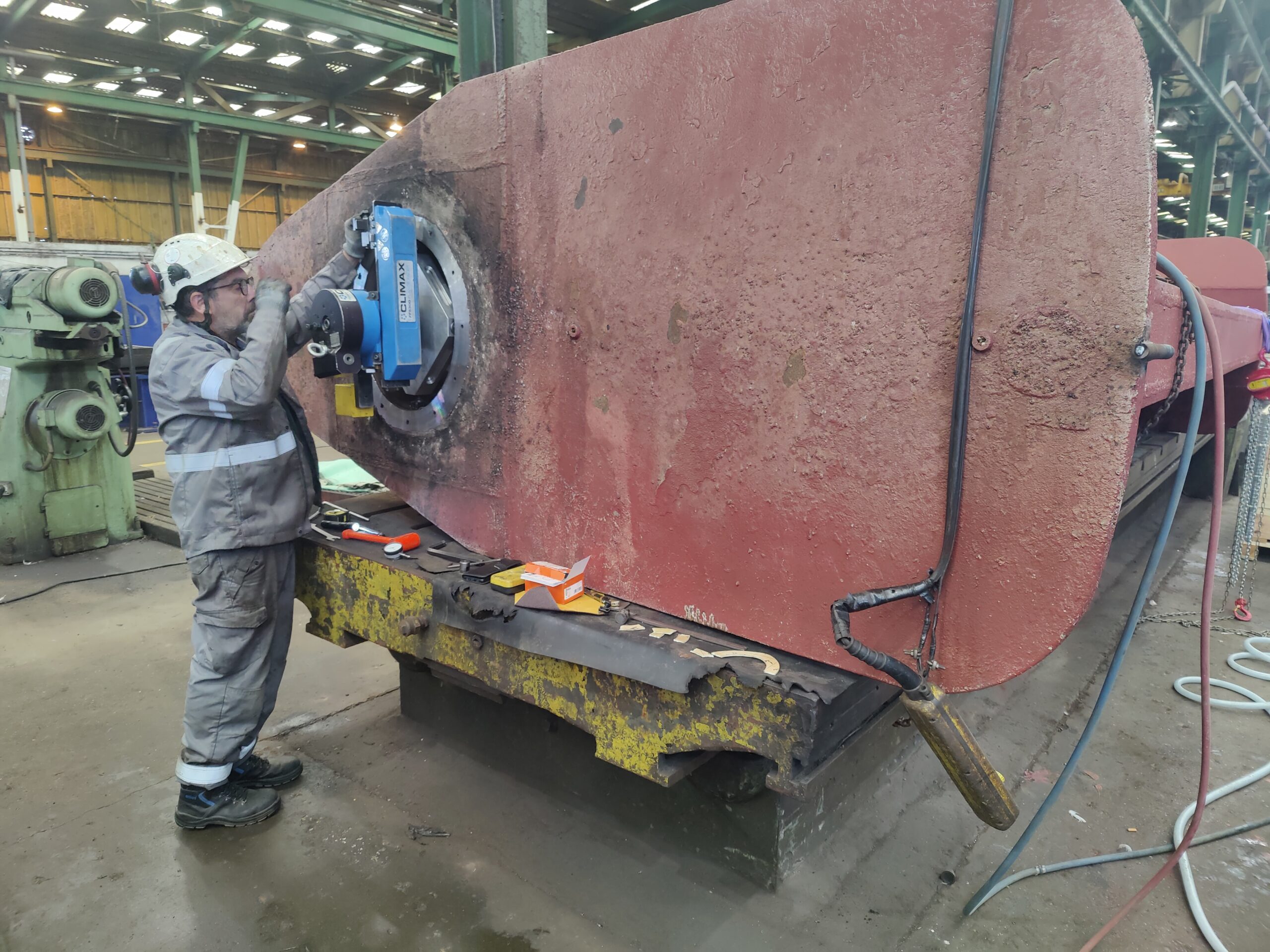
On-site machining is an advanced industrial solution that allows machining operations to be performed directly on industrial equipment and installations, without the need for disassembly or transport to a workshop. This approach is used for both corrective and preventive maintenance, offering significant advantages in terms of time savings, cost reduction, and minimized production downtime.
Where is On-Site Machining Used?
On-site machining is widely used in most industries:
- Oil & Gas Industry: Repair of flanges, heat exchangers, and pipelines.
- Maritime Sector: Maintenance of engines, propeller shafts, and deck equipment.
- Power Generation: Machining on turbines, alternators, and hydraulic systems.
- Heavy Industry: Repair and adjustment of presses, rollers, and mechanical structures.
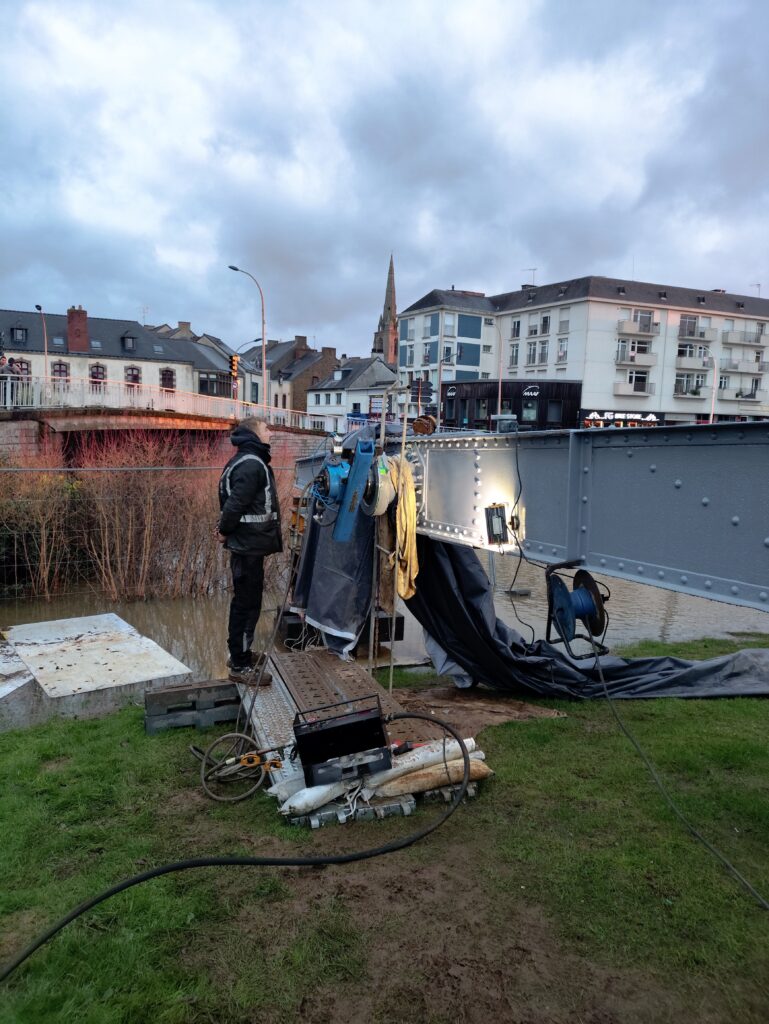
24/7 on-site intervention
On-site machining specialists are the troubleshooters of the industrial sector. Their mission: intervene quickly—24/7 if needed—to reduce production downtime. They apply traditional machining techniques to situations where parts must be repaired in place.
In many cases, removing a damaged component is either impractical or impossible—such as on a ship, within large piping systems, or inside industrial plants. This requires a high level of adaptability and expertise from on-site machining technicians.
Our mission: intervene quickly 24/7 if needed to reduce production downtime.
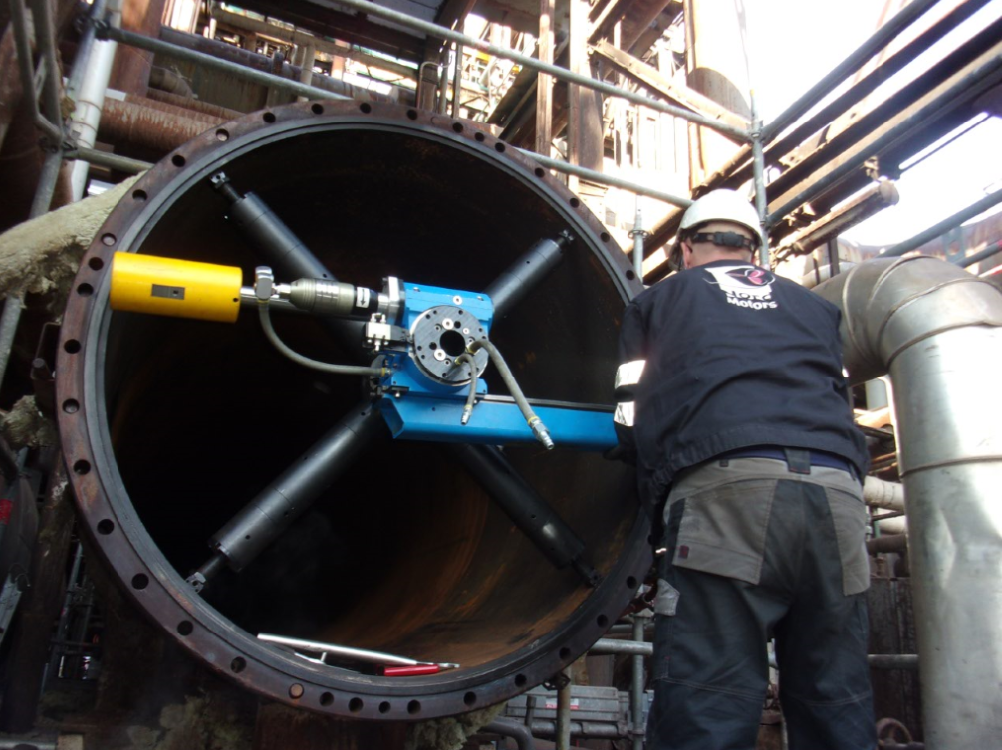
Key Steps in an On-Site Machining Project
Each on-site machining job follows a structured process:
- Needs Assessment – A thorough inspection and analysis of the issue, environmental constraints, and technical requirements.
- Technology & Equipment Selection – Choosing the most suitable machining methods and tools for the job. In some cases, custom solutions must be designed.
- Adaptation & Setup – Portable precision machining equipment is installed and adapted to the specific working conditions.
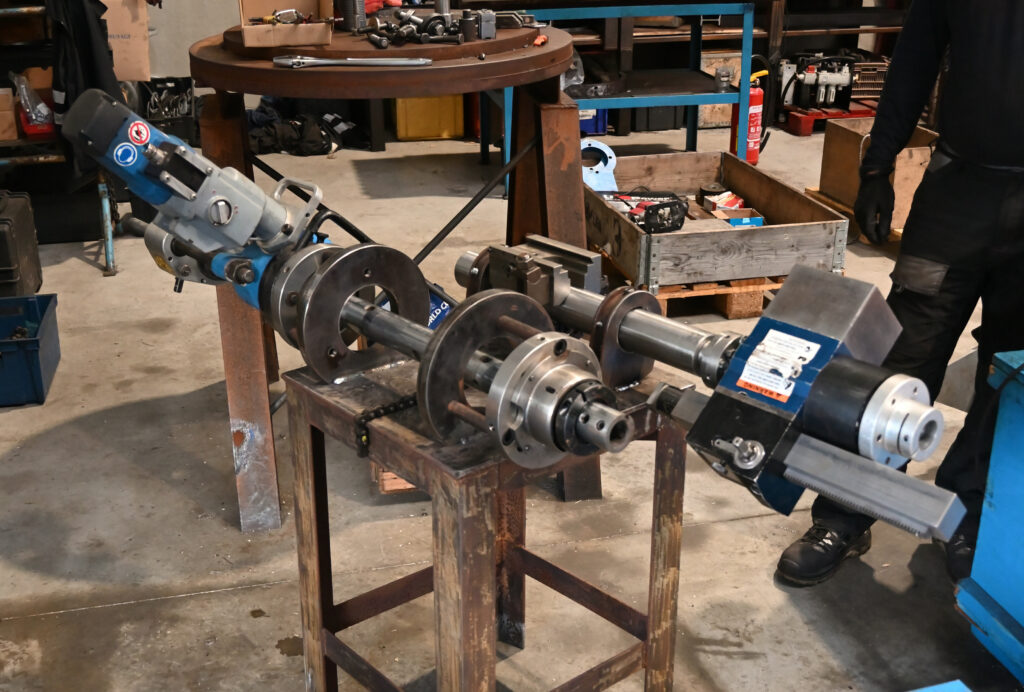
- Machining Operations – Depending on the job, see bellow the techniques that may be used.
- Last step : Quality Control – After machining, rigorous tolerance checks are performed. Laser alignment verification may be used to ensure accuracy.
The most frequently performed machining operations include:
- Line boring
- Flange facing
- Milling
- Pipe cutting
- In-situ drilling
- tapping
A Constantly Evolving Profession
With ongoing technological advancements, on-site machining continues to evolve, integrating increasingly precise tools and advanced digital control systems. This enables technicians to work on ever more complex equipment while maintaining the highest quality standards. Successful project execution requires in-depth technical knowledge of machine capabilities, as well as exceptional attention to detail.
At Nord Motors, our on-site machining technicians are highly experienced and regularly trained on the latest technologies.
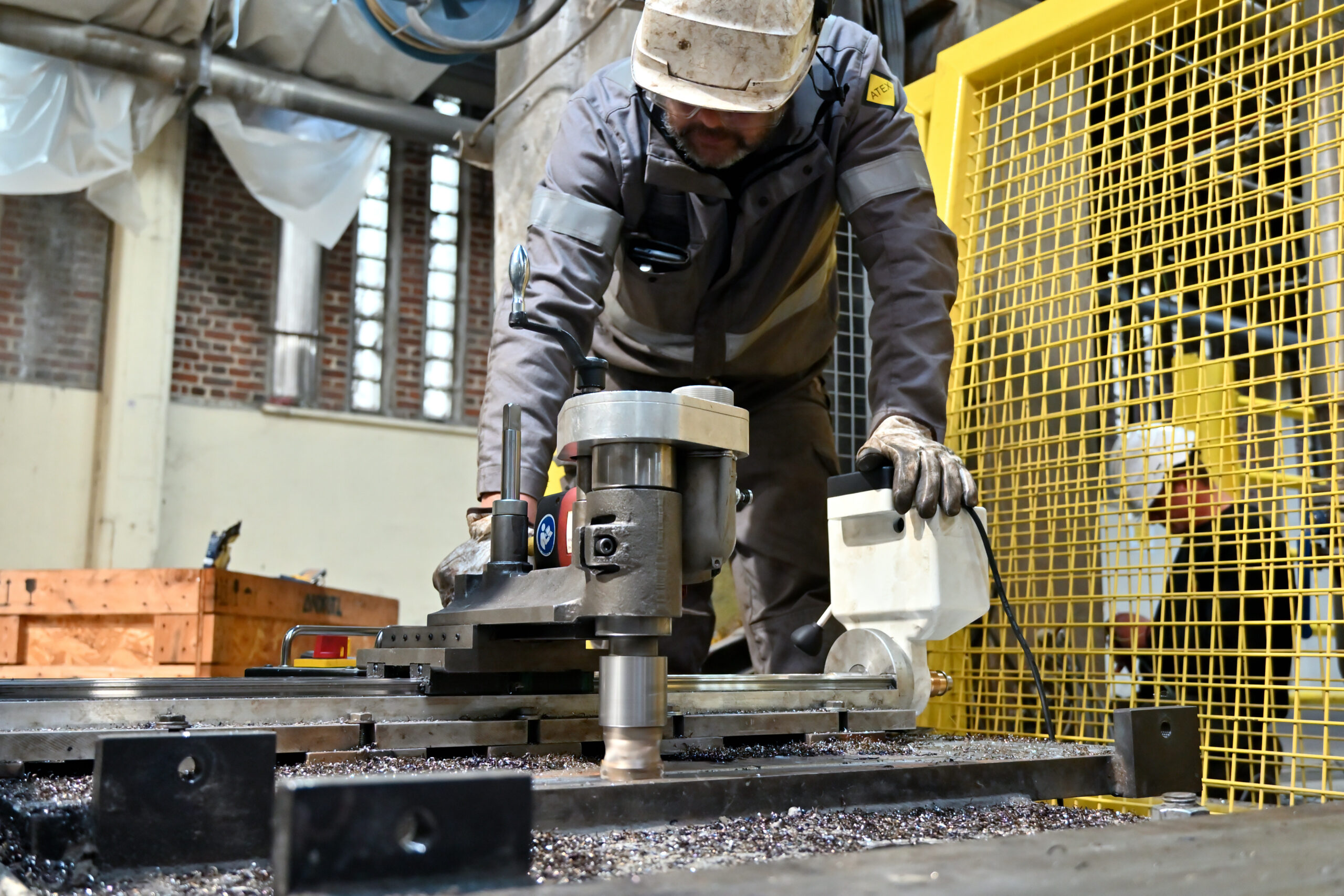
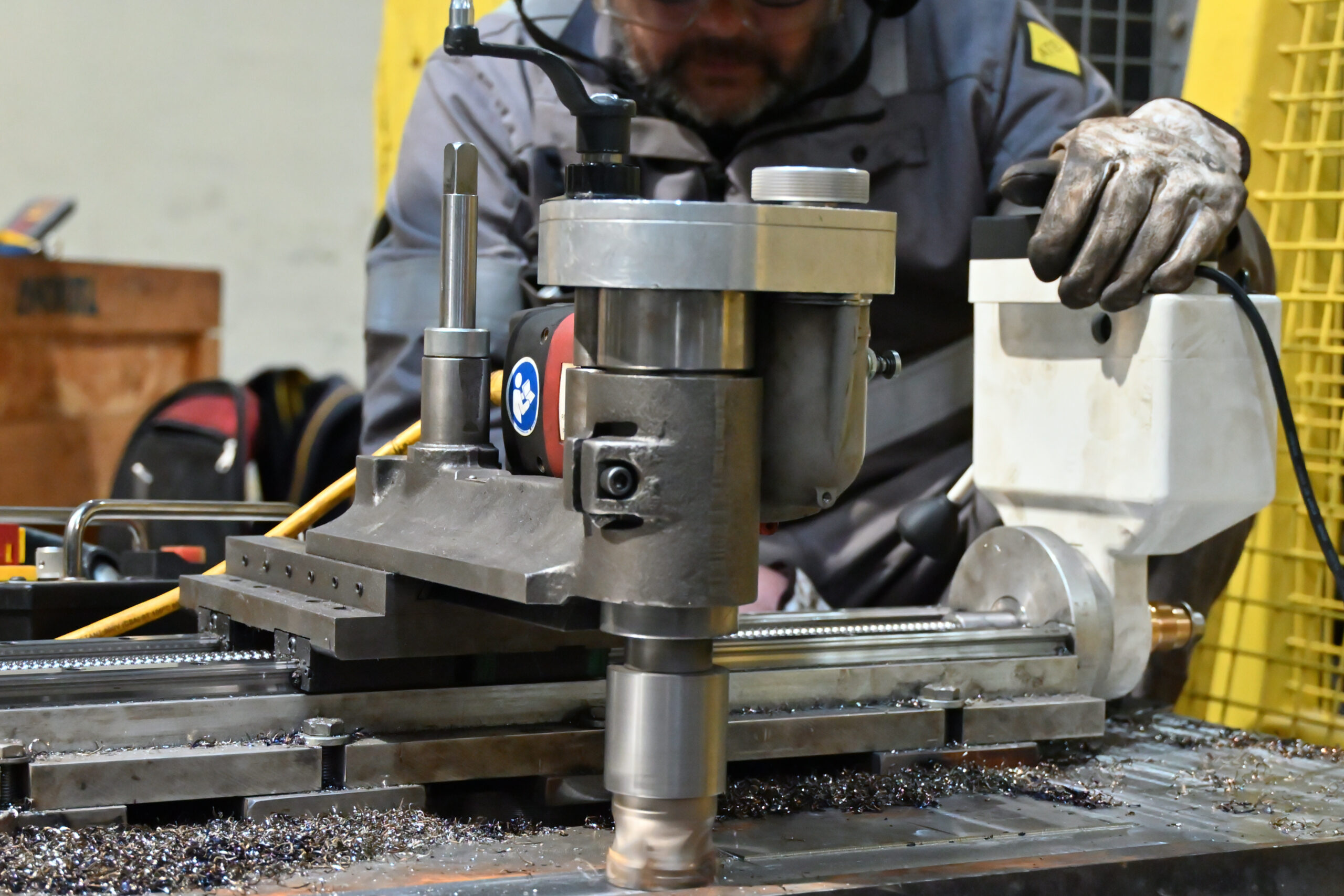
Discover one of our technicians at work on-site. In this example, milling operations are being carried out to modify an engine mounting surface on a paper mill production line.
Share this FAQ article